Sunshine State of Mind Embroidery Design
First Impressions: Bright, Balanced, and Brimming with Personality
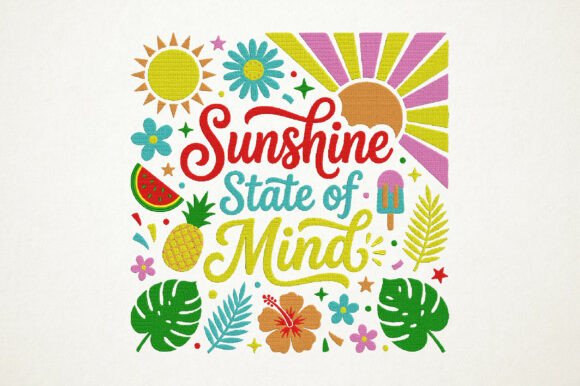
As an embroidery designer who’s tested hundreds of digital embroidery files for personalized gift shops and Etsy sellers, I opened Sunshine State of Mind Embroidery Design expecting cheerful summer energy—and it delivered. The first thing that stands out is its emotional clarity: it feels playful but not childish, vibrant but not chaotic, tropical but not clichéd. The quote sits at the heart of the design, surrounded by stylized palm fronds, sun rays, and subtle floral accents—just enough detail to feel hand-drawn, but clean enough for reliable machine stitching. It leans modern with a handmade warmth, making it ideal for customers seeking a personalized gift that feels both intentional and joyful.
Where This Design Truly Shines (and Why Your Customers Will Love It)
Sunshine State of Mind Embroidery Design excels in contexts where mood and meaning matter as much as craftsmanship. For baby embroidery, it adds lighthearted optimism to organic cotton blankets or muslin swaddle sets—especially for Florida-born babies or families who vacation south. As a wedding gift, it elevates linen pillow covers or monogrammed beach towels for destination couples or those who cherish laid-back elegance. Nursery decor gains instant personality when stitched onto canvas wall art or framed crib sheets. And for small shop products? Think custom tote bags for boutique pop-ups, embroidered aprons for coastal cafes, or kitchen towels sold alongside local citrus marmalade—it’s a ready-made story starter.
Etsy sellers will appreciate how naturally this design supports product photography: the contrast between warm yellows, coral, and sky blues pops against neutral backdrops, and the balanced composition keeps the eye centered without crowding. When paired with soft fabrics and thoughtful packaging, Sunshine State of Mind Embroidery Design increases perceived value—not because it’s complex, but because it feels *chosen*, not generic. That emotional connection translates directly to buyer engagement and repeat orders.
Smart Placement: Where to Stitch (and Where to Pause)
This isn’t a one-size-fits-all embroidery file—and that’s a strength. Its charm lies in intentionality. Use it confidently on stable, medium-weight fabrics: cotton twill for tote bags, linen-cotton blends for pillow covers, terry cloth for embroidered towels (avoid ultra-thick loops), and tightly woven cotton for blanket embroidery. It works beautifully on flat, smooth surfaces—think front-of-apron panels or center-stitched baby blankets.
Proceed with care on stretchy baby clothes (like knits), curved surfaces (mugs or curved tote straps), or dark fabric unless you’ve confirmed thread color contrast in your mockups. Delicate details—like fine sunbeam lines or tiny leaf veins—may soften on textured fabric or with low-density stitching, so always test on scrap fabric first. If your customer orders a lightweight muslin nursery banner, consider simplifying the outer elements or adjusting stitch density to prevent puckering. And never skip checking hoop size compatibility—this design reads best when given breathing room, not squeezed into a 4x4 frame.
Practical Notes Every Embroiderer Should Confirm Before Stitching
- Test on scrap fabric using your exact thread colors and stabilizer combo—especially if stitching on terrycloth or linen.
- Check thread color contrast on both light and dark fabric; some tropical tones may fade on navy or charcoal unless you boost saturation.
- Confirm hoop size before digitizing adjustments—this design benefits from a 5x7 or larger hoop for optimal clarity.
- Review stitch density: dense fills work on stable fabrics, but reduce density slightly for breathable baby items or lightweight totes.
- Use appropriate stabilizer: tear-away for stable cottons, cut-away for knits or towels, and lightweight fusible for delicate linens.
- Compare light and dark fabric mockups—a printable mockup helps set accurate customer expectations before stitching begins.
- Inspect small details after stitching: verify sun rays and letter edges are crisp, especially on smaller sizes.
- Confirm commercial licensing before selling finished products—this is essential for Etsy sellers, craft fair vendors, and small shop owners offering custom embroidery.
Why This Design Builds Trust—and Keeps Customers Coming Back
When a customer orders a personalized gift, they’re not just buying thread and fabric—they’re investing in feeling seen. Sunshine State of Mind Embroidery Design supports that trust because it balances aesthetic appeal with execution reliability. It doesn’t overpromise intricate lacework or micro-lettering, yet delivers consistent charm across applications. That consistency builds credibility: when your embroidered towel looks as bright and cohesive in person as it did in the listing photo, customers leave five-star reviews and tag friends. For wedding gift designers or baby product creators, that reliability means fewer revisions, smoother custom order workflows, and stronger brand recognition.
It also invites storytelling—a key driver for handmade product buyers. A customer ordering this for their daughter’s “Florida baby” nursery isn’t just getting embroidery; they’re anchoring a memory. That emotional resonance lifts your entire catalog, encouraging bundling (e.g., matching towel + blanket + onesie) and cross-selling seasonal collections.
Final Thought: A Summer Staple, Not Just a Seasonal Trend
Sunshine State of Mind Embroidery Design earns its place in your embroidery library not because it’s flashy, but because it’s functional, flexible, and full of heart. It’s equally at home on a baby’s first beach blanket, a groom’s custom linen handkerchief, or a small shop’s signature tote bag. For embroidery makers, gift shop owners, and digital product sellers alike, it’s proof that thoughtful design—paired with smart execution—turns simple thread into meaningful keepsakes. Just remember: test, adjust, and stitch with intention. Because the best personalized gifts don’t just look good—they feel like home.